

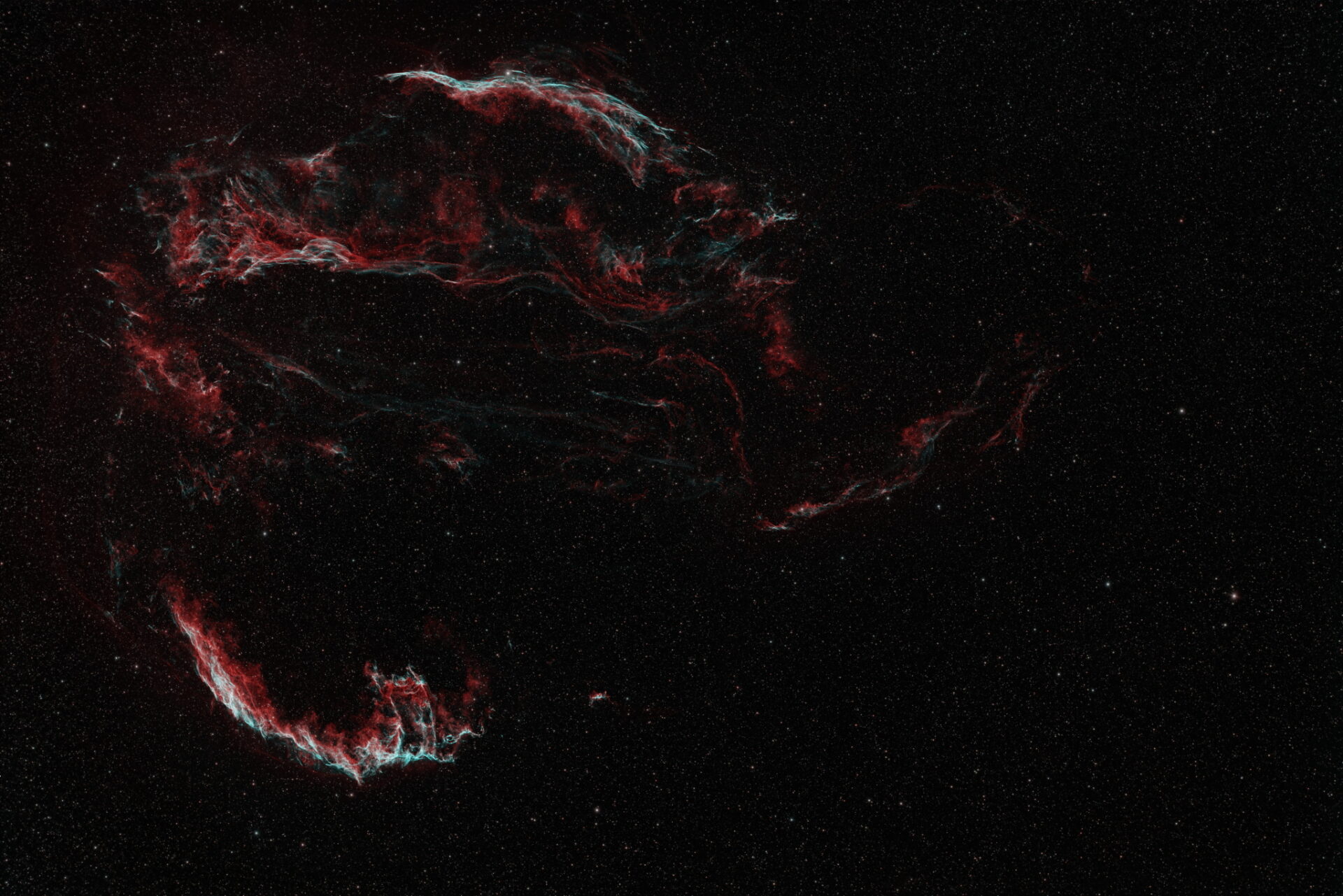
The Veil Nebula
by Dr Nigel Price
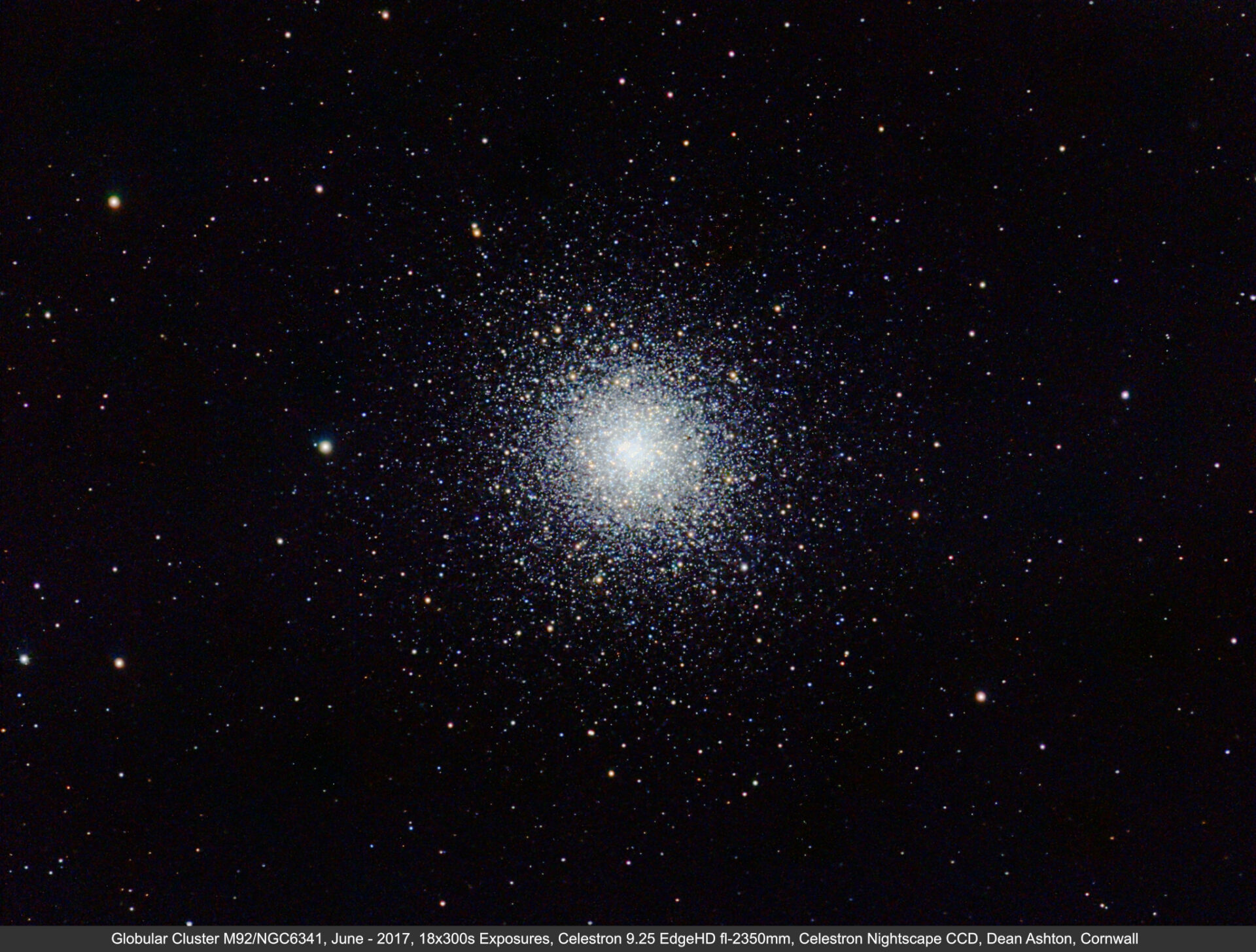
M92 – NGC6341
by Dean Ashton
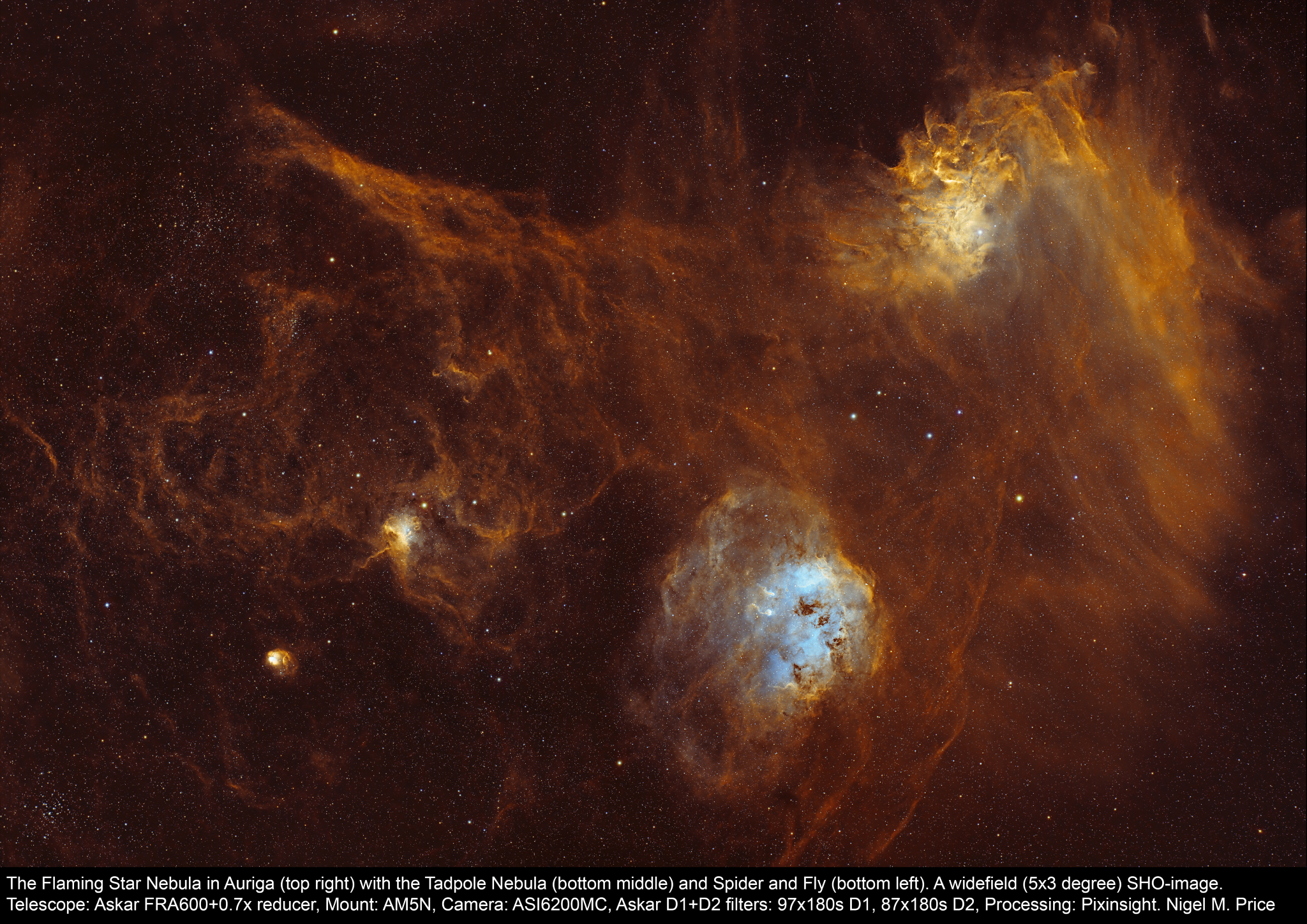
The Flaming Star, Tadpole and Spider and Fly nebulas in Auriga by Dr Nigel Price
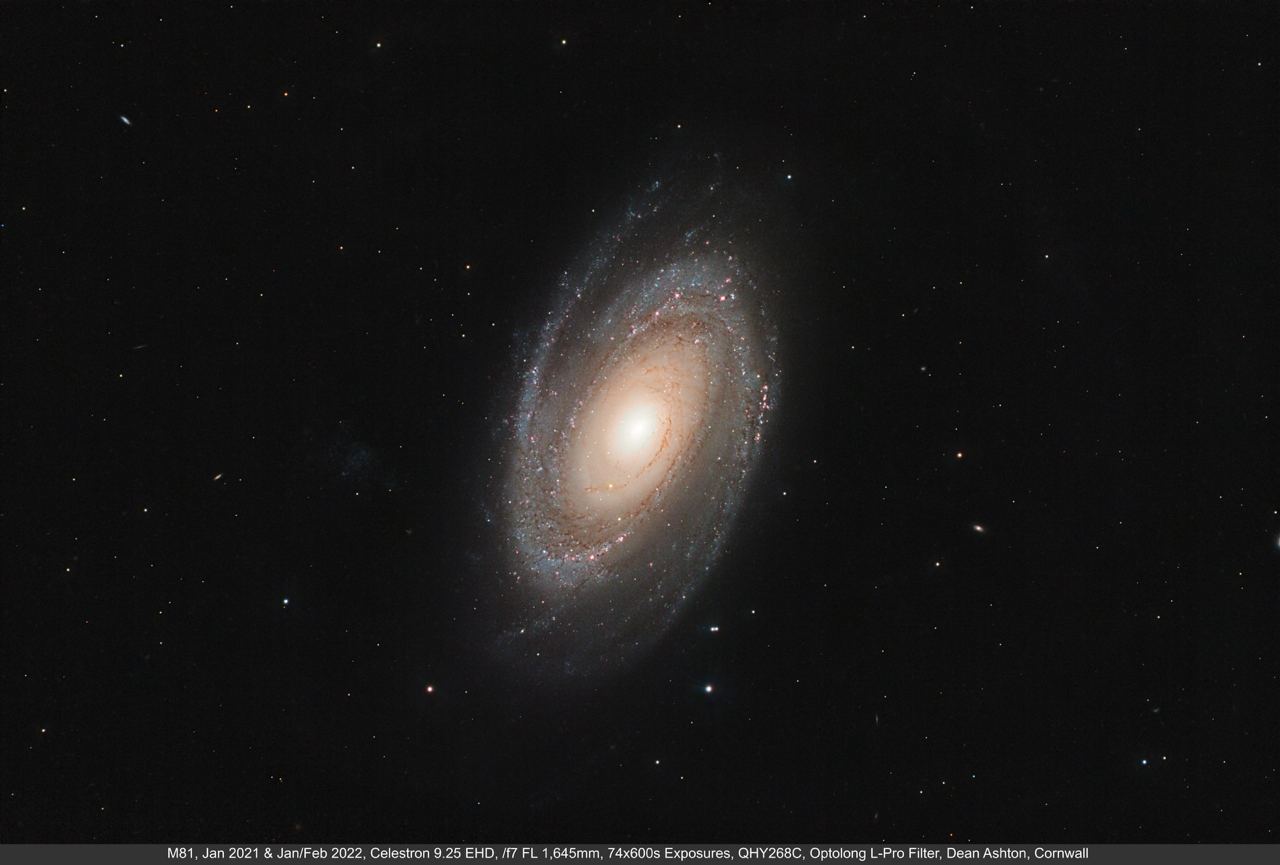
NGC 3031 – M81
Taken over three night during 2021 and 2022. Celestron 9.25 EHD @ f/7 74×600 sec subs using a QHY268C camera through an Optolong L-pro Filter. By Dean Aston
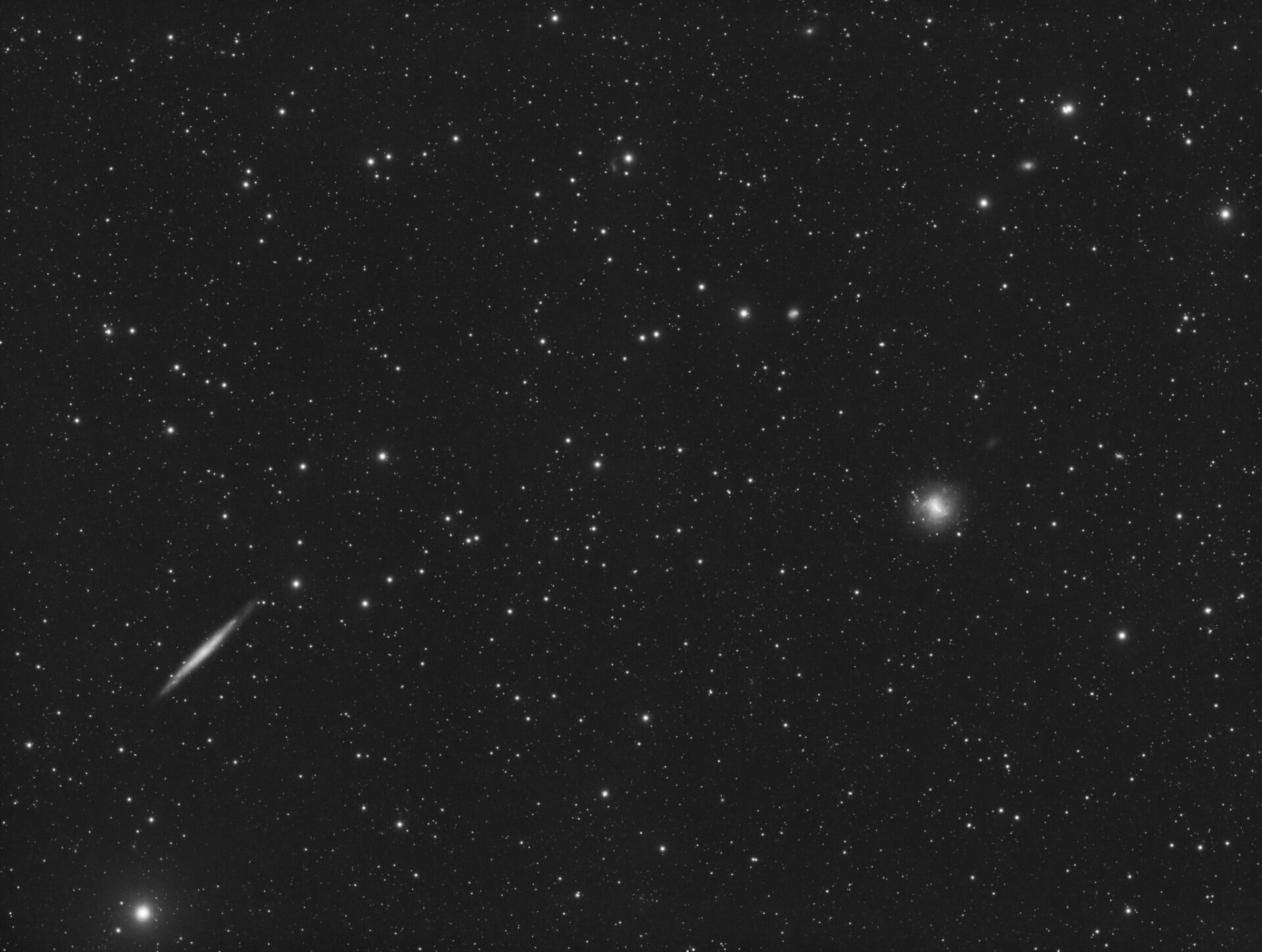
NGC4244 on the lower left and NGC4214 middle right.
It’s NGC4214 that piqued my interest. The most obvious is how chaotic it looks. On further investigation it’s classed as an ‘Irregular’. In my copy of ‘Hubble Atlas of Galaxies’ it goes further and names them as Irr Type 1 or Megallanic Cloud type irregulars. If they took the Large Megallanic Cloud and repositioned it 11 mly away it would look very much like NGC4214 shown here.
It’s also called a s Starburst galaxy, which is one with an exceptionally high rate of star formation compared to the average. This activity is so great, that around the 6 or so blue star clusters, the stellar winds form bubbles in the surrounding gas. Over time these bubble increase in size as the Hot ‘O’ type stars within them grow older. This activity is so great that these galaxies are often called Wolf-Reyet galaxies. As well as containing lots of new young stars, this galaxy contains many old red supergiants which suggest that this bout of current star formation is not the first and with the abundant supply of hydrogen will likely continue to do so in the future.
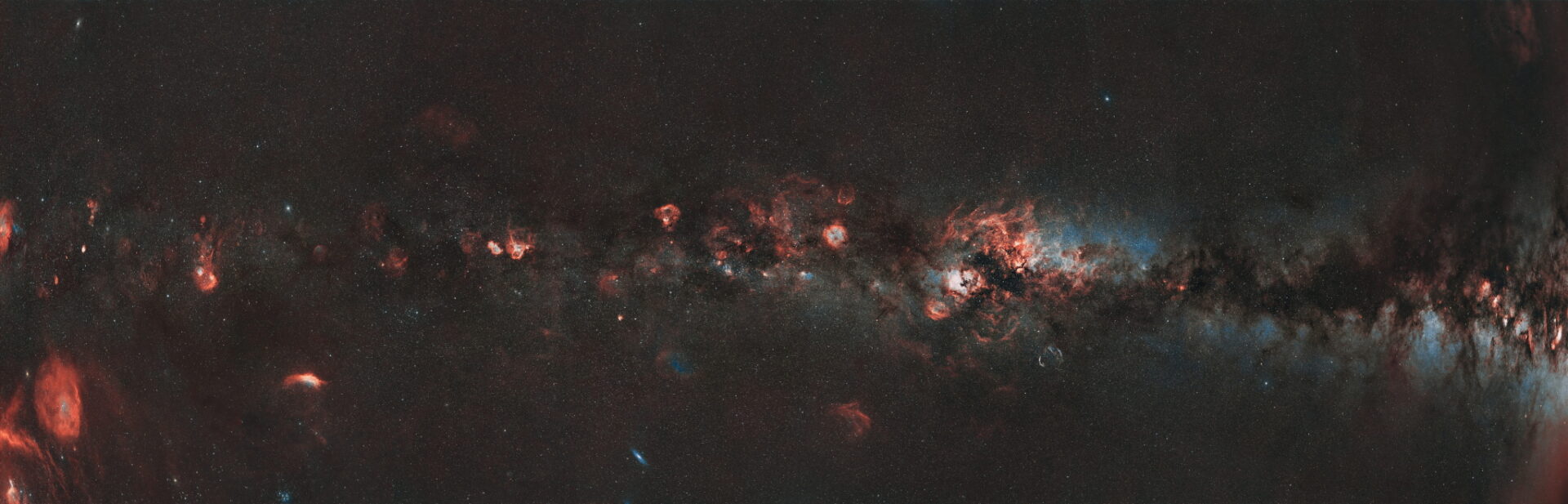
The Milky Way (mosaic)
by Dr Nigel Price
All images are Copyright of the respective owners names against each image.